
What is Forex
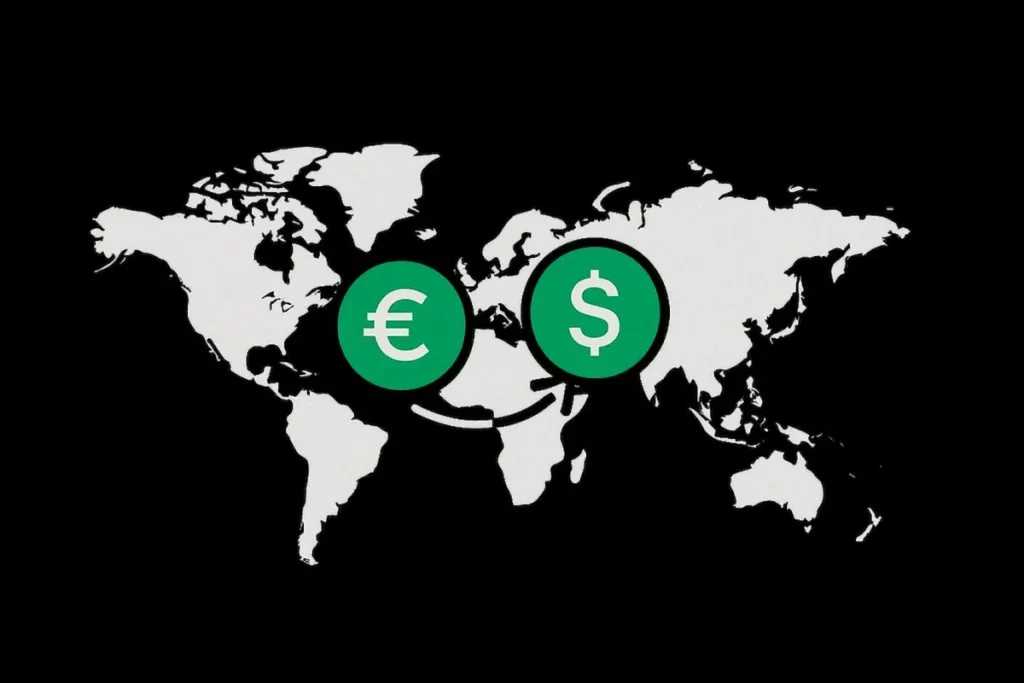
If you have ever traveled abroad, you have likely taken part in the forex market without even realizing it. Consider going to an airport to talk to the currency exchange desk. You pay with money and see various numbers on a screen. You convert currency from your country into the currency of the country you’re going to.
In official trading terms, if you are an American visiting Japan, you sell dollars to buy yen. Thus, a foreign exchange rate is the relative price of two currencies from two different countries. At the end of the trip, if there are some yen remaining, the yen are changed back.
Due to the fluctuation of the rates, you may discover that your funds are actually slightly more or less useful than they were as soon as you landed. It is such changes in value that make people money in foreign exchange.
What is Forex and How Does It Work?
Retailers call the forex market forex. Large institutional traders and big banks often call it simply FX. After all, forex trading is a strategy that involves flipping between global currencies.
A Global and Decentralized Network
Forex is not like stocks or commodities and doesn’t trade on a national exchange like the New York Stock Exchange. Rather, it acts as a worldwide, decentralized network. Currencies are sold electronically over the counter. This means all transactions happen directly between participants via computer networks all over the world.
The Dynamics of Currency Pairs
In this market, you never buy or sell a single currency alone. Currencies always trade in pairs. Each time you make a trade, you are selling a currency to buy another. Each currency has its unique three-letter code, which can help traders in identifying it easily. For example, the US dollar is USD, the euro is EUR, and the British pound is GBP.
A typical forex pair looks like this: EUR/USD.
- Base Currency: This is the currency that the pair is based on and is the left side of the pair. It will never be more or less than one.
- The Quote Currency: This is the currency on the right side of the pair. It displays the amount of that currency that you must purchase to have one unit of the base currency.
If you buy the EUR/USD pair, you expect the euro to strengthen against the US dollar. A gain in the value of the euro means you make a profit off your investment. Your position becomes less valuable if the euro makes any losses or declines. The absolute price of currencies never falls. For one currency to drop, another must grow stronger. All transactions have a winner and a loser.
How Big Is the Forex Market Really?
There are many financial articles that love to play big numbers to display the size of the currency market. People always talk about how forex is an enormous market and how trillions change hands every day. While the market is indeed massive, it helps to break down what those numbers actually mean.
The Total Volume vs. The Spot Market
According to Bank for International Settlement data, the world of forex trading amounts to either $6.6 trillion or $9.6 trillion per day. In fact, the New York Stock Exchange (NYSE) trades about $80 billion a day. In terms of daily turnover, the total forex market is more than 100 times larger than the largest stock exchanges.
That’s a large figure, though, for the planet’s foreign exchange market as a whole. It contains complex financial instruments such as foreign exchange swaps, outright forwards, options that are used by huge institutions. Most retailers trade daily on the spot market. The spot market handles immediate currency exchanges and is smaller, averaging about $3 trillion a day.
The Retail Trading Segment
The proportion of everyday individual traders is rather small in comparison. According to recent surveys, retail trade represents about 6% to 2.5% of the overall daily foreign exchange volume. This equals roughly 200 billion to 500 billion dollars per day. That’s still a ton of money, but that is nowhere near the multi trillion dollars of hype you’ll hear online.
Just ten massive banks actually dominate the vast majority of global forex trading. They trade approximately one third of the globe’s total trading volume.
Why Do People Trade Forex?
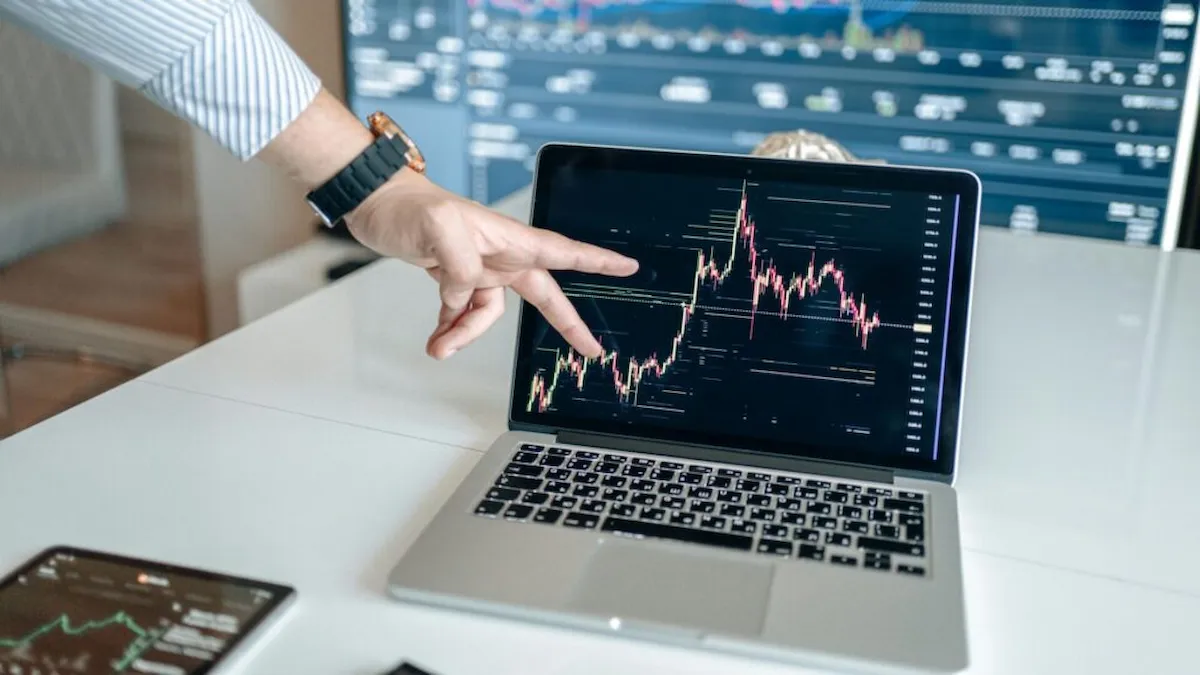
Forex is the most popular financial market, as it offers some advantages that you cannot find in traditional stock markets.
1. Trading Both Up and Down Markets
In general, for those who invest in simplified stocks or mutual funds, you stand to profit if the stock or fund rises, but not if it falls. Forex trading is different altogether. You are always going for a trade in two currencies, so you can bet on both the bear and the bull markets.
If you believe the value of a currency pair will go down, it is possible to do a short sale. When you believe it will go up, you purchase it long. This flexibility offers opportunities, even in times of a struggling global economy.
2. Extreme Liquidity and Constant Volatility
With hundreds of thousands of transactions happening every second, currency prices are constantly moving. This activity provides an opportunity for traders to take advantage of small price fluctuations in the short run.
Due to the huge size of the marketplace, it has a high liquidity rating. High liquidity means there are always available buyers and sellers. This helps to keep transaction costs competitive and makes it easy to get in or out of a trade at a moment’s notice.
3. Risk Management and Hedging
Many companies and investors use Forex to manage financial risk. These products are called hedges. For instance, if a business imports goods from abroad, then it would be obligated to pay in a foreign currency. If that currency rallies all of a sudden, their costs will increase drastically.
By opening a strategic Forex position that gains if the foreign exchange rises, the company is able to reduce their real-world business losses. Individual traders also use positive currency correlations to control their total market exposure.
Understanding Key Forex Concepts
Before opening a trading account, you have to learn the recognized words of the forex market. Here are the core terms you will encounter daily.
Pips and Pipettes
Pips are points and percentages. It is a 1-digit indication of movement in the 4th decimal place of a currency pair. For example, if the GBP/USD pair moves from 1.35361 to 1.35371, it has moved exactly one single pip.
However, there are exceptions to this rule. When you trade pairs that involve the Japanese yen, a pip is measured at the second decimal place instead of the fourth. The price change that occurs at the fifth decimal is called a pipette.
Lots and Standard Sizes
You don’t simply purchase $5 or $10 of currency in the retail domain. The lots are the sets of currencies that are traded. The individual movements of currency prices are very small, and lots tend to be large for traders to achieve meaningful results. A standard lot represents 100,000 units of the base currency.
Leverage and Margin
Forex leverage is the opportunity to trade a large volume of money with a small investment. The sum of money required to establish a leveraged position and carry it is known as the margin.
For instance, the EUR/USD pair will have a very small margin of 0.50%. By not requiring $100,000 in cash to buy a typical-sized lot for trading, you’ll be able to deposit just 500 dollars. Leverage can greatly enhance the potential for gains or profits, but it can also greatly enhance the risk of loss. It functions as a double-edged sword that requires strict discipline.
The Bid-Ask Spread
Forex brokers do not usually charge a flat commission on trades. Instead, they make money through the spread. “Spread” simply represents the gap in between the buying price and selling price of a currency pair.
What you will see is that it is always priced below the actual market rate, and the buy rate is always a little above the market rate. To earn a profit on a trade, the market price has to shift enough so as to beat this spread.
The Market That Almost Never Sleeps
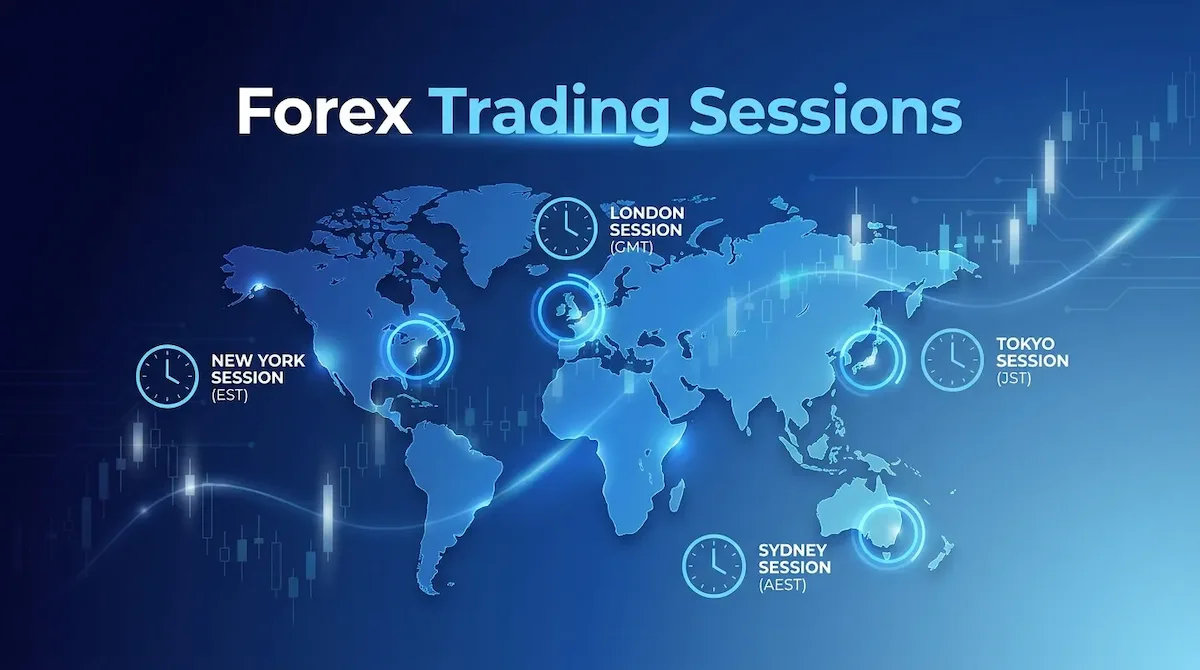
An aspect that makes trading forex one of the most appealing parts of the business is the trading hours. The stock market operates until close of business each day, while the forex market is open 24 hours a day 5 days a week. It only shuts down during weekends.
This cycle can be done continuously, as trading constantly moves from one financial headquarters to another throughout the world.
The trading session/day officially begins as participants check in at NZ. As the day progresses, the action moves to Sydney, Tokyo, Singapore, Hong Kong, Frankfurt, London, and finally New York. As the New York session ends, the cycle begins again in New Zealand.
The top three trading time zones are Asian, European, and American. Generally, price action is heaviest and fastest when these regional sessions overlap.
What Moves Currency Prices?
Currencies are symbols of entire national economies, and so many different factors affect their rise and fall. While predicting an exchange rate is difficult, there are three major rules that affect the market the most.
- Central banks: Central banks manage the quantity of money in a country. When a central bank puts out a policy such as quantitative easing, it gives its economy more money. This addition to supply can lead to currency devaluation.
- Economic News Reports: Large financial institutions and individual investors would like to invest in strong economies and those that have a positive outlook. Positive economic data can lead to increased foreign investment in that country and subsequently higher demand for that currency when these numbers are released. Negative news has the opposite effect, causing demand to fall.
- Market Sentiment: Market sentiment is a psychological feeling of traders. It can frequently be a big response to economic information. When the trading community agrees that a currency is going in one direction, they will trade accordingly. This shared belief often creates self-fulfilling momentum in the market.
How to Get Started Safely
When you start doing currency trading, you should go gradually and learn. With the advances in the current financial landscape, it is easy for a new investor to get going and test the waters before spending any real cash.
First, use free education, trading courses, and webinars to increase your basic knowledge about it. Second, get a demo account at a primary broker. Most brokers provide virtual funds that allow you to plan, place, and monitor live trades in a completely risk-free environment. This allows you to practice different styles, such as short-term scalping, day trading, or longer-term swing trading, to find what works best for you.
After gaining trust and awareness in utilizing protective stops and limits, you can move to an active account and begin trading the worldwide currency market with actual funds.
Final Thoughts
The forex market’s massive scale and 24-hour cycle offer a dynamic environment for retail traders. But it’s important to understand the difference between the multi-trillion dollar hype and trading reality. To succeed in the world of currency trading, you must build a strong base of knowledge, understand concepts such as leverage and spreads, and practice proper risk management.
Enhance your trading skills and confidence over time by beginning with educational content and practicing through a risk-free demo.
FAQs
Is there a difference between forex trading and currency trading?
No, there is absolutely no difference. Both are the same way of swapping around cash in the currency market to make money.
How do forex traders actually make money?
Traders make money by correctly predicting how a currency pair’s price will move. If you believe a pair will go up, you buy it long. If you believe it will go down, you sell it short.
Is forex trading income taxable?
In general, yes, your forex profits earned from trading contracts for difference or classic broker accounts could be subject to taxation. But if you are trading, your trading losses are usually tax deductible.
Who regulates the global forex market?
Forex is decentralized and covers the whole world, so there is no single governing authority monitoring it 24 hours a day. Rather, local regulators within every country are responsible for overseeing local providers and enforcing strict local financial requirements.