

Forex Market Size and Liquidity

The Forex market is the greatest and most active financial market in the world. Trillions of dollars are exchanged between currencies daily. The exchange takes place between one government, bank, the other, and lastly, individual traders. You encounter this large financial supply chain when you purchase a foreign product, visit a foreign country or trade foreign currency pairs in an online exchange. Understanding how the foreign exchange market operates requires a close look at two primary concepts: market size and liquidity.
In this article, you will understand why this marketplace is so large, how liquidity works and the relevance of this to your trading career.
What is the Foreign Exchange Market?
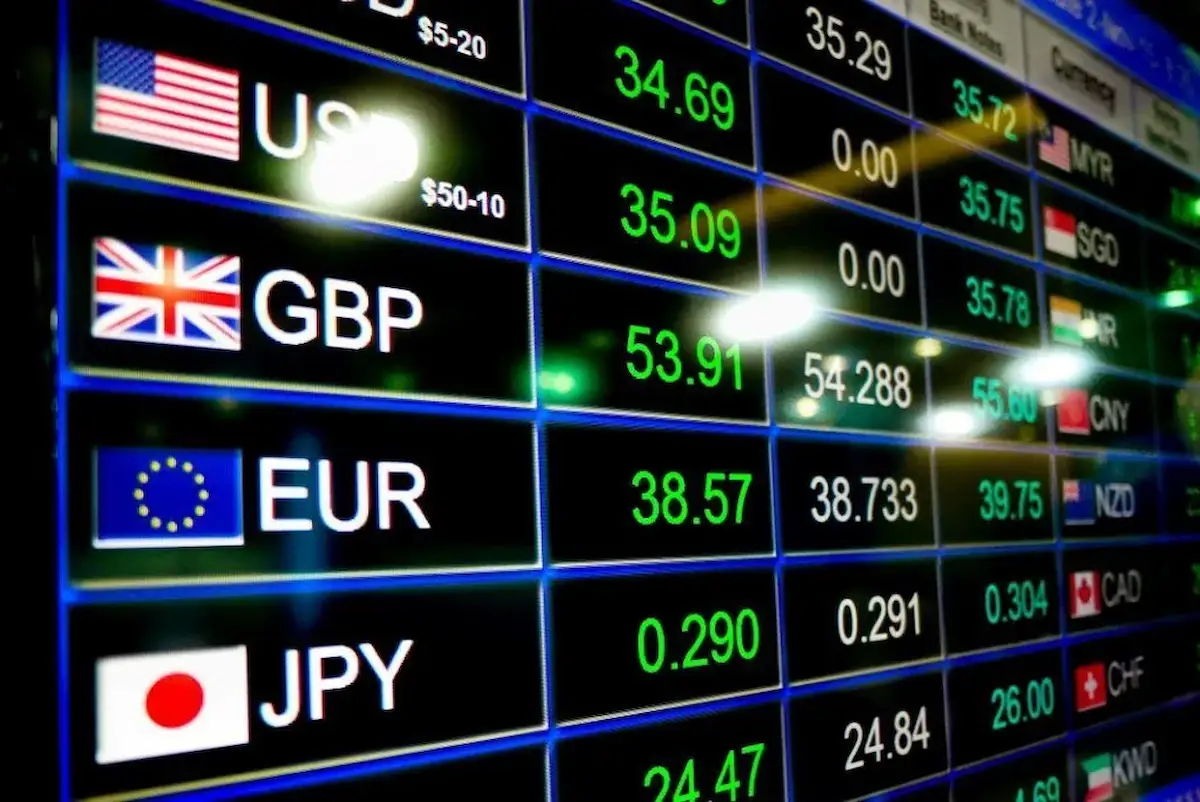
The foreign exchange market, commonly known as forex or FX, is a global marketplace for trading national currencies against one another. Currencies always trade in pairs, such as the Euro against the U.S. Dollar (EUR/USD). The value of the currency pair is the amount of the first currency required to purchase one unit of the second currency.
The forex market is an over-the-counter (OTC) market, unlike the traditional ones, which are traded on a centralized trading floor. It implies trading takes place electronically, and through a decentralised international networks of banks, financial institutions and retail brokers.
The market is open around the clock for five days a week, as it encompasses several time zones around the world. When trading in Tokyo or Sydney ends, London and New York trading centers start work. This continuous activity enables the traders to trade with currencies almost any time of day or night.
Understanding Forex Market Size: How Big Is It?
Experts usually use daily trading volume when discussing the market size. The amount of cash that is transacted on a daily basis in the forex market is absolutely massive.
In the foreign exchange market, the total volume of trades made on a daily basis is about $6.6 Trillion. Other estimates, and more general measurements bring that overall number up even higher. Now let’s compare this number with the global stock market. The total worldwide daily trading volume of all major exchanges was about $16.7 billion.
The massive scale of forex trading creates unique advantages for market participants:
- Rapid execution: There is high buying and selling interest, which means that one can practically enter and exit orders in seconds.
- Fair pricing: With a very high volume of trading, it’s hard for any one entity to influence the currency prices over an extended period of time.
- Low transaction costs: Super popular currency pair trade prices have been kept low due to the high volume.
Most forex trading occurs on the interbank market. This is an online platform on which top tier banks exchange currencies directly with each other.
Why the U.S. Dollar Dominates the Forex Market
While hundreds of currencies exist worldwide, a select group of major currencies drives the majority of trading volume. Among these, the U.S. Dollar (USD) is the sole dictator of the currency market.
If you’re looking at currency deals, there are two currencies in each deal, so the percentage of individual currencies is 200 percent. Around 84.9 percent of all your Forex trades will include the U.S. Dollar. The Euro (EUR) stays in second place at 39.1 per cent followed by the Japanese Yen (JPY) at 19.0 per cent.
Currency Share in FX Transactions (Total 200%):
- U.S. Dollar (USD): 84.9%
- Euro (EUR): 39.1%
- Japanese Yen (JPY): 19.0%
- British Pound (GBP): 12.9%
- Australian Dollar (AUD): 7.6%
- Swiss Franc (CHF): 6.4%
- Canadian Dollar (CAD): 5.3%
- Other Currencies: 25.0%
The U.S. Dollar holds such a heavy hand in global trading because of a number of factors:
- World reserve currency: Global financial data indicate that around 62 percent of the foreign exchange reserves held by central banks are in U.S. Dollar.
- Economy power: The USA is the world’s largest national economy.
- Global trade pricing: Several key global commodities, such as crude oil, are priced and settled in U.S. Dollar.
- International debt: Approximately half of all international loans and bonds are in U.S. Dollar terms.
- Political stability: During global crises, investors view the U.S. government and its financial markets as safe havens.
Traders should keep a close eye on U.S. economic indicators and Fed policy, since the U.S. Dollar is also very important in international trade.
What is Forex Liquidity and How Does It Work?
Liquidity is the ease of buying or selling an asset without causing a significant price change. A highly liquid market means there are many buyers and sellers. You can make big transactions without changing the market price too much from the desired entry price.
Liquidity providers play a critical role in keeping the forex market running smoothly. They are large commercial banks or liquidity institutions that are constantly displaying both bid and ask offers in various currency pairs.
Volume in the forex market is not officially recorded as there is no single exchange. Rather, liquidity estimation is tackled by market analysts and trading platforms through evaluating two main indicators:
- Tick frequency: The number of price changes or updates occurring within a given period.
- Bid-ask spread: The spread between the bid and ask price of a currency pair.
The more often prices are changing and the lower the spread, the more liquid the market. At the other end of the spectrum, price changes decline and spreads increase, liquidity is low.
Factors That Influence Forex Liquidity
Liquidity is not a fixed value. It varies from day to day during the trading hours and depends on various real world factors.
1. Trading Sessions and Time Overlaps
One can find the big forex hubs in Asia, Europe and North America. The greatest liquidity occurs when two or more major centres are active simultaneously. Trading is busiest and fluid when the London and New York sessions overlap. Conversely, timing during holidays or later Asian trading hours have less liquidity.
2. Major Currency Pairs vs. Exotics
Liquidity varies among the various currency pairs available. Major pairs such as EUR/USD, USD/JPY, and GBP/USD have very high trading volumes and are very liquid. Exotic currency pairs, which combine a major currency with the currency of a developing nation, have much lower volume and wider spreads.
3. Economic News Releases
Many institutions cancel orders ahead of important economic releases like inflation results or monetary policy decisions. This is equivalent to a liquidity squeeze for a short while. When the news breaks, order inflows reverse and rapid price swings and volatility emerge.
Speculation vs. Commercial Use in Forex
What reasons are there for people to trade foreign currencies? The forex market fulfills a number of basic economic functions:
- Currency conversion: Helping international trade and cross border business payments.
- Trade finance: Short term credit for international transactions.
- Risk Management (Hedging): Safeguard of businesses about losses due to exchange rate changes.
- Speculation: The practice of trading in securities with the aim of making short term gains.
Commercial trading is essential to global trade, but speculative trading accounts for more than 90 percent of all forex volume. To make profits from minor price fluctuations, individual traders, hedge funds and institutional investors are continuously engaging in the trading of currency pairs. The substantial speculative activity gives rise to a liquidity pool that is beneficial to all those who interact with the market.
Forex vs. Stock Market: Key Comparison
Many new traders first compare foreign exchange to equity markets. While these both markets hold great opportunity, the structure of these markets are quite distinct.
| Feature | Forex Market | Stock Market |
| Daily Volume | Roughly $6.6 trillion per day | Roughly $16.7 billion per day |
| Market Structure | Decentralized over-the-counter (OTC) network | Centralized stock exchanges (e.g., NYSE) |
| Trading Hours | 24 hours a day, 5 days a week | Standard exchange hours (around 8 hours per day) |
| Market Liquidity | Extremely high for major currency pairs | Varies widely by company market cap |
| Transaction Costs | Primarily built into bid-ask spreads | Brokerage commissions and spreads |
| Asset Selection | Concentrated on major currency pairs | Thousands of individual stocks and indices |
The high liquidity and 24-hour nature of forex provide flexible access to traders worldwide. In contrast, stock traders are limited by localized exchange hours and lower overall volume.
Understanding Different Types of Forex Markets
Forex trading takes place across three main specialized markets:
- Spot Forex Market: The instant exchange of currencies for the current market price. It’s one of the most significant spot transactions physically or digitally.
- Forward Forex Market: An customized settlement between two parties to exchange a predetermined volume of currency on a future date at a predetermined cost. Corporations often use forward contracts to manage future exchange-rate risks.
- Futures Forex Market: A futures contract traded on an organized exchange at a regulated time to buy or sell a currency. Futures contracts are different from forward contracts because futures contracts have exchange clearinghouses that help mitigate counterparty risk.
Benefits and Risks of High Market Liquidity
While it has several benefits, trading in a huge market like this also has clear risks that must be managed by every trader.
Key Benefits
- Tight Spreads: The price difference between buying and selling is kept to a minimum thanks to high competition among Liquidity Providers, resulting in money saved on every order executed.
- Minimal price Slippage: Orders will typically be executed around the market price you would like.
- Flexibility: Withdrawal and trading times are nearly limitless.
Key Risks
- High Leverage Risks: Forex brokers often offer high leverage, such as 100:1. Using leverage means that you can manage huge positions with just a small sum, however the flip side to that is that losses can inflate at the same speed as profits.
- Volatile Volumes: Liquidity may temporarily disappear when major economic events occur, and this can cause sudden price movements and increased spread.
- Limited Regulatory Oversight: Since the OTC market is unregulated, traders should stick to reputable and regulated brokers to safeguard their funds.
Conclusion
The forex market is the greatest and most fluid money market in the world. With its impressive daily trading volume of $6.6 trillion, mainly powered by the U.S. Dollar, it provides unparalleled rapidity of order execution, round-the-clock access, and low transaction fees. Market liquidity helps make trading smooth and efficient, but it is important to have a good understanding of market hours, economic news cycles, and smart risk management.
FAQs
What makes forex so liquid?
The forex market has high liquidity because it spans the entire world and is open 24 hours a day across the various financial hubs. It requires the participation of the world’s central banks, global commercial banks, firms, and millions of people who speculate.
Is high volatility the same as high liquidity?
No, volatility and liquidity measure different market conditions. Liquidity indicates how readily trades can be made without affecting the market price. Volatility is a function of the magnitude and velocity of price fluctuations. Low liquidity can lead to high volatility in a market, particularly during significant news events.
Why does forex liquidity drop right before major economic news?
Institutional liquidity providers usually pull their resting orders out or decrease them prior to important news occasions to prevent sharp losses. This decline in active orders immediately dampens the liquidity of the market which can provide a temporary relief until the market absorbs the news.
How is forex liquidity measured without a central exchange?
Liquidity is estimated by the number of ticks and bid-ask spread across the major brokers and other liquidity providers, since no major broker is reporting the total volume. The more ticks and tighter spreads, the better market liquidity.
Which currency pair has the highest liquidity in the world?
The EUR/USD (Euro vs. U.S. Dollar) currency pair boasts the highest liquidity in the forex market. It says the most volume of daily trading because of the huge economic exchange between Europe and the United States.
Also read: Exploring The Volatility of Forex Markets