
Gold Price Forecast: Caught Between A Hawkish Fed and A Fragile Peace
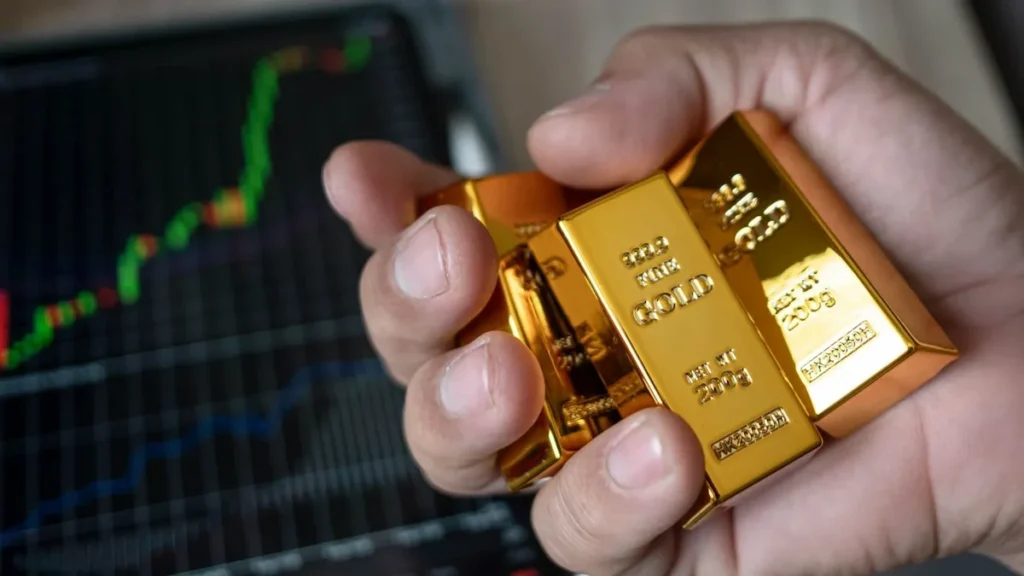
Just four months ago, gold set an all-time high of $5,589. Today it trades at $4,524 — down nearly 19% — trapped inside a descending technical channel and squeezed between two opposing forces: a newly sworn-in hawkish Federal Reserve chairman and a slowly unwinding Middle East conflict. Gold is not collapsing. But it is at a crossroads, and which direction it breaks will matter enormously to investors, central banks, and the broader global economy.
The Warsh Effect, the Iran Truce, and the Technical Breakdown
Spot gold is forming lower highs and lower lows within a clean two-hour descending channel. A rejection above the $4,578–$4,584 supply zone last week preceded a bearish break below $4,524 support. The RSI holds at 50.66 — neutral, not oversold — leaving room for further decline toward $4,461 and potentially $4,371. Key resistance sits at $4,524 and $4,546.
Two macro forces are driving this.
First, Kevin Warsh was sworn in as US Federal Reserve Chairman on May 29, 2026. With April CPI running hot and rate-cut expectations evaporating, traders are now pricing a 39% chance of a rate hike by year-end. Since gold yields nothing, rising real rates are its natural enemy.
Second, the eight-week US-Iran ceasefire is holding, with Hormuz Strait oil flows recovering to 75–80% of normal volumes. The geopolitical risk premium that powered gold’s January peak is gradually deflating — reducing the safe-haven urgency that had made gold so compelling earlier this year.
Yet structural support persists. The People’s Bank of China has added to its gold reserves for 17 consecutive months. Global central bank purchases have exceeded 1,000 tons annually since 2022 — more than double the pre-2022 pace — as nations systematically reduce dollar-denominated reserve exposure after the 2022 freezing of Russian assets.
Bears Rule the Short Term – Bulls Own the Long Game
For short-term traders, the technical and macro setup is bearish: momentum is negative, rates are rising, and geopolitical premiums are fading. For long-horizon investors and central banks, the picture diverges sharply. Goldman Sachs targets $5,400 by year-end; JPMorgan forecasts $5,055–$6,300; UBS sees prices above $5,900. These are not speculative outliers — they reflect a consensus view that fiscal imbalances, persistent inflation, and reserve de-dollarization have permanently reset gold’s structural floor.
The Contradiction Gold Must Resolve
Gold’s dilemma mirrors the global economy’s own contradictions. The same Iran conflict that drove it to record highs is now, through its partial resolution, unwinding those gains. A new Fed chair arrives to fight yesterday’s inflation with tomorrow’s rate hikes. Yet every major Wall Street bank is still bullish. In 2026, gold is not a simple safe-haven trade — it is a verdict on whether the world’s financial architecture is as stable as its short-term price suggests.
KEY TAKEAWAY: Gold’s short-term technical breakdown and hawkish Fed pivot present real near-term risks, but record central bank buying and unanimous Wall Street bullishness above $5,400 signal that the current dip may prove to be consolidation — not capitulation.